
Specialty Coffee vs. Supermarket Coffee: Is It Worth the Price?
A kilo of supermarket coffee costs around €18. A kilo of specialty coffee costs over €50. So it is fair to ask: does it really taste that much better? Or are you just paying for a nice bag? Let us show you what is behind the price, do the honest maths and tell you how to recognise good coffee yourself. Small spoiler: the difference per cup is much smaller than you think.
What is specialty coffee, anyway?
It sounds like a marketing term, but it has a clear meaning. Trained tasters score coffee using a fixed method on a scale of up to 100 points. They look at aroma, sweetness, acidity, body and aftertaste, among other things. Only coffee that scores 80 points or more counts as specialty coffee. Just a small share of the world's harvest makes the cut.
On top of that, specialty coffee can be traced back to its origin. You know which country and region it comes from, often even which farm. Supermarket coffee, on the other hand, usually just says "Arabica blend".
Four differences you can taste
1. The harvest
For specialty coffee, the coffee cherries are usually picked by hand, and only the ripe ones. With mass-market coffee, everything is often harvested at once: ripe, unripe and overripe cherries all end up in the same sack. You notice that later in your cup. After harvest, the beans are also carefully sorted, so defective beans never make it into the roaster.
2. The roast
Large industrial roasters roast huge batches in just a few minutes, often very dark. That gives a consistent taste, but it also hides flaws in the beans. Small roasters take their time. That way, the beans keep their own character.
3. Freshness
Supermarket coffee often sits in a warehouse for months before it reaches you. Specialty coffee is roasted in small batches and shipped quickly. Coffee tastes best roughly one to six weeks after roasting.
4. The taste
The result: instead of just "strong" or "mild", you taste real flavours. Cocoa, nuts, caramel, sometimes even berries. And much less bitterness. Many people who try specialty coffee for the first time suddenly stop adding sugar.
The honest maths: what does a cup cost?
A cup needs about 9 g of coffee. Here is how it adds up:
- Supermarket coffee (from around €18/kg): about 16 cents per cup
- RASCH specialty coffee (from €6.90 for 125 g): about 50 cents per cup
- Coffee to go at a café: €3 to €4 per cup
So the difference compared to supermarket coffee is about 35 cents a day. For that, you get coffee that tastes like it came from a good café, at a fraction of the price. Or to put it another way: a whole week of specialty coffee every morning costs about the same as a single cappuccino at a café.
Where your money goes
The low supermarket price has a downside. At the start of the chain, the people who grow the coffee are often left with very little. We do things differently: we pay fair prices for the work on the farms. Because good coffee starts with the people who grow and harvest it. And only people who are paid fairly can invest in quality. Careful care of the plants, a clean harvest, good processing: in the end, you taste all of it in your cup.
How to get the most out of it at home
Good coffee deserves good brewing. Three simple rules are all you need:
- Buy whole beans. Ground coffee starts losing its aroma within minutes. If you have a grinder or a bean-to-cup machine, grind just before brewing.
- Store it properly. Coffee likes it dark, cool and airtight. The fridge is not a good idea, because the beans absorb moisture and smells there.
- Don't brew too hot. Boiling water burns the delicate flavours. Around 92 to 96 °C is ideal. Just let the water stand for a moment after boiling.
Spot good coffee in 30 seconds
One look at the bag tells you almost everything. Check these four things:
- Roast date: Good roasters print the roast date on the bag, not just the best-before date. The best-before date tells you nothing about how fresh the coffee really is. On our bags, you will find both.
- A specific origin: country and region, not just "South America" or "highlands".
- Tasting notes: for example cocoa or caramel, not just "strong".
- Matte beans: Very shiny, oily beans are usually roasted very dark. Find out why that matters especially for bean-to-cup machines in our guide.
Try it yourself
The best way to be convinced is to taste it. Order a small bag and drink it for a week instead of your usual coffee. After that, you will be able to tell the difference blindfolded.
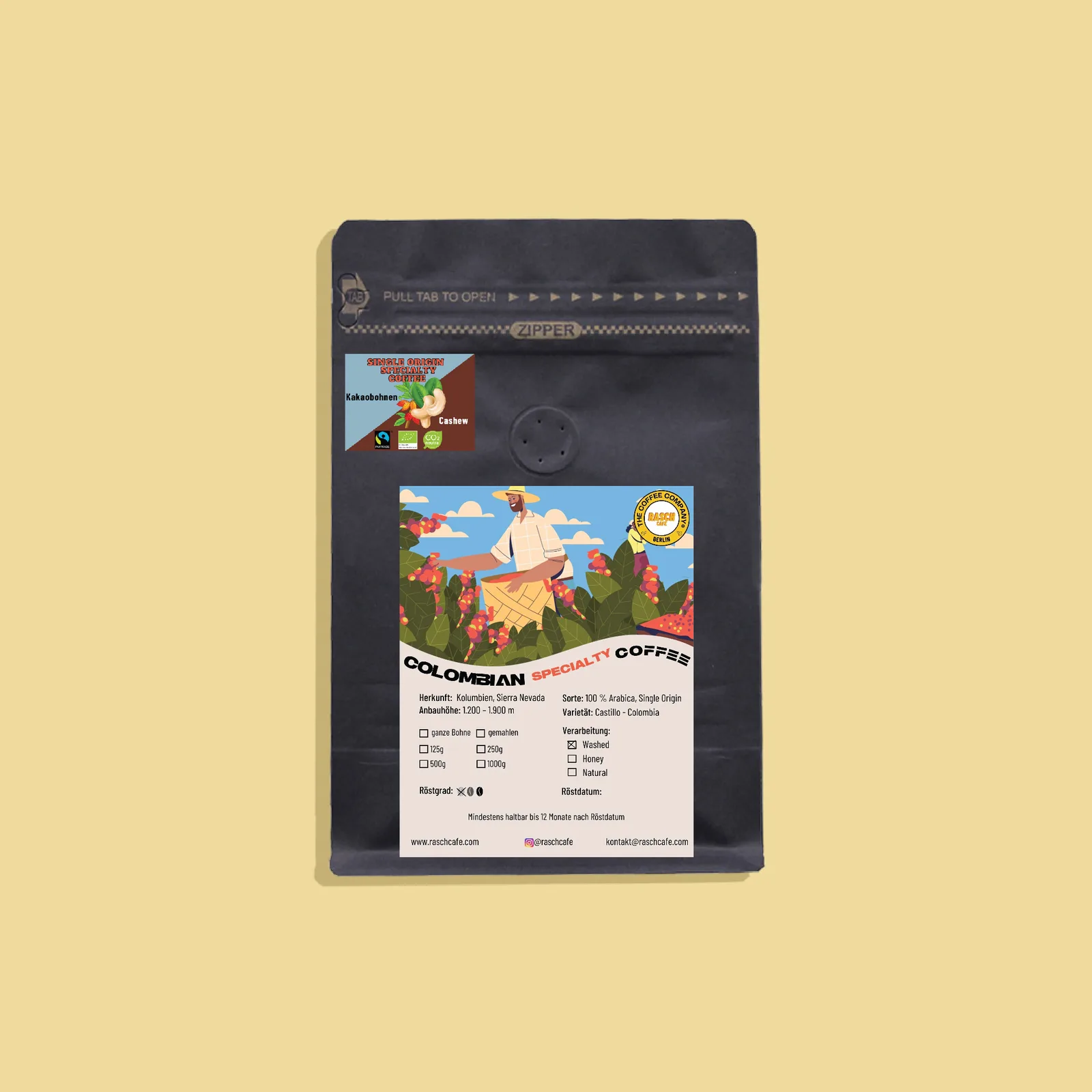
Our tip to get started: Sierra Nevada from Colombia, with notes of cocoa and cashew. Smooth, balanced and the perfect way to discover specialty coffee. From just €6.90 for 125 g. More of a cappuccino person? Try Almond Mountain, with notes of dark chocolate and roasted almonds.
Freshly roasted in Berlin, delivered in 3 to 7 days, free shipping from €50.
Frequently asked questions
What is the difference between specialty coffee and regular coffee?
Specialty coffee scores at least 80 out of 100 points in professional tastings, can be traced back to its origin and is roasted fresh in small batches. Regular supermarket coffee is usually a blend from many origins and often roasted very dark.
Why is specialty coffee more expensive?
Hand-picking, careful sorting, fair prices for the work on the farms and roasting in small batches all cost more. Even so, it works out at only about 50 cents per cup.
How can I tell how fresh my coffee is?
Look for the roast date on the bag. The best-before date alone tells you nothing about freshness. Coffee tastes best roughly one to six weeks after roasting.